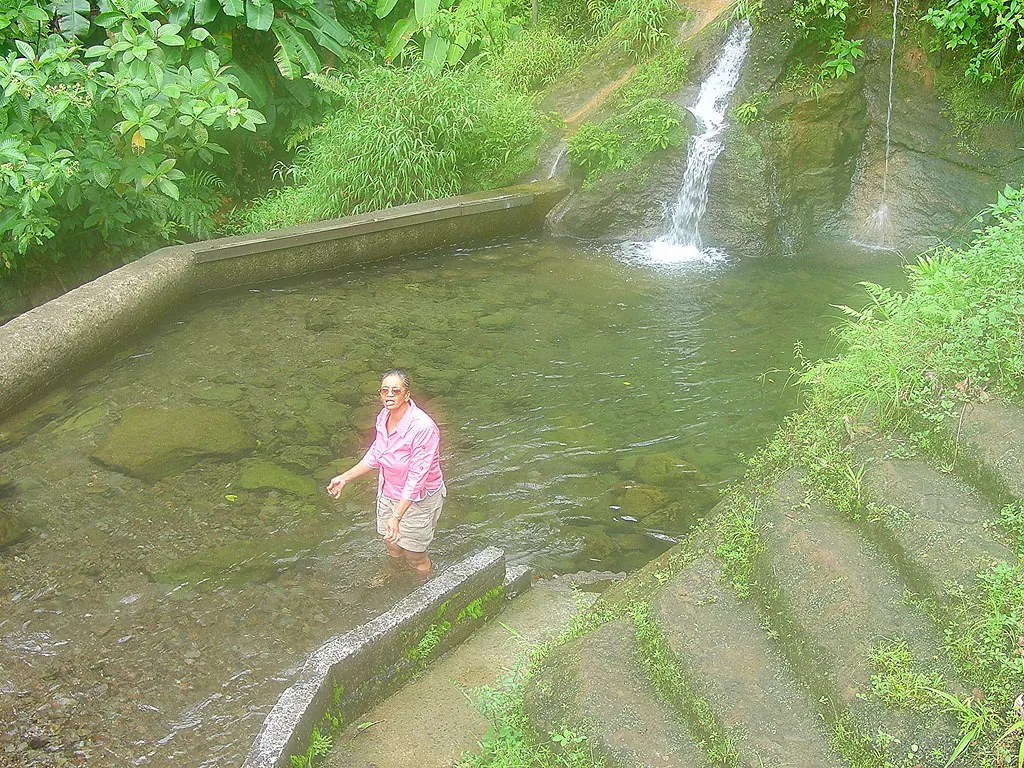
The Sensory Transition
Stepping off the muddy trail in Laudat shifts your physical reality. The dense, humid air of the Dominican rainforest abruptly cools as you approach the jagged mouth of Titou Gorge. The sun struggles to penetrate the narrow opening. Black volcanic rock rises sharply on either side, casting permanent shadows across the water. This natural corridor—formed millennia ago when cooling lava split apart—holds fresh mountain runoff. The water here runs cold. Mid-January temperatures drop to around 65°F (18°C), sending an immediate shock through the body as you step off the moss-slicked entry rocks. You defintely feel the chill sink into your bones before your core temperature regulates. If you are arriving directly from the cruise port in Roseau, the sudden temperature drop demands a quick mental adjustment. The contrast catches many unprepared. You adapt quickly once you start moving against teh flow. The high walls block the wind, creating an isolated, silent microclimate broken only by the sound of rushing water echoing down the canyon.
Swimming Conditions & Expectations
| Metric | Details |
|---|---|
| Water Temperature | 65°F–70°F (18°C–21°C) |
| Swim Distance | Approx. 50-75 meters |
| Depth | Varies; deep sections require buoyancy |
| Mandatory Gear | Life jacket (issued at site) |
| Physical Effort | Moderate (upstream swim) |
Navigating the Corridor
Every visitor wears a mandatory life jacket. The depth drops significantly mere feet from the starting point, and the buoyant assistance allows you to focus on pushing upstream rather than keeping your head above the surface. You must pull yourself through the narrows. The current strengthens as you approach the middle sections, requiring deliberate, steady strokes. Swimmers move in a single-file line. Keep your elbows tucked close to your ribs to avoid scraping against the dark rock walls you swim between. The passage twists, obscuring the destination and amplifying the sensory isolation. Many independent travelers book a guided gorge and Trafalgar Falls excursion to master the specific mechanics of this swim under professional supervision. Guides routinely assist weaker swimmers through the bottleneck points where the rushing water creates localized resistance.
“The water is bracing, but the sight of the hidden waterfall at the end makes every stroke worth the chill.”
The Hidden Waterfall & Geothermal Contrast
The canyon widens into a cavernous chamber. A powerful cascade crashes into the pool, churning the surface and creating a continuous roar that echoes off the ceiling. You swim directly into the spray. The sheer force of the mountain runoff creates strong localized currents, demanding steady paddling to maintain your position near the rocks. The chill sets in after ten minutes in this shaded grotto. Climbing back out into the Laudat sunlight brings immediate relief to tired muscles. Most hikers head straight for the nearby sulfur baths. For a complete breakdown of these warming pools, read A Guide to Dominica’s Volcanic Hot Springs. Submerging your shivering muscles into 100-degree geothermal water strips away the cold shock entirely. Combining these sites forms the backbone of popular island adventure itineraries. The transition from freezing mountain runoff to scalding volcanic groundwater represents the ultimate physical expression of Dominica’s extreme geology.
Essential Gear & Safety
Protecting your equipment requires strict preparation. The environment is relentlessly wet, and the high humidity penetrates unsealed bags. Standard water-resistant phones will fail if dropped into the deep sections of the corridor. Pack your electronics in a heavy-duty dry bag clipped securely to your life vest. Wearing sturdy water shoes prevents severe cuts on the submerged rocks near the entry point. Consult our full What to Pack for a Dominica Rainforest Adventure list for specific gear recommendations.
The Dominica Forestry, Wildlife & Parks Division mandates strict safety protocols. Read the official Visitor Rules & Guidelines before arriving at the trail. The Discover Dominica Authority stresses that no chemical sunscreens should enter the water system. This pristine watershed feeds directly into the protected ecosystems of Morne Trois Pitons National Park, recognized globally for its undisturbed biodiversity. Preserving the water clarity remains the top priority for park rangers.
Frequently Asked Questions
Do I need to be a strong swimmer?
While life jackets are strictly mandatory for all entrants, basic comfort in deep, moving water is essential due to the upstream current. Non-swimmers can still enter the initial shallow pool near the stairs, but the journey to the final waterfall requires active paddling and cardiovascular stamina. Guides can assist those who tire quickly, but you must propel your own body weight through the narrows.
Is the water always cold?
Yes, the gorge holds fresh runoff from the high-elevation mountain springs. The water maintains a brisk temperature between 65°F and 72°F year-round, as the towering canyon walls block out warming sunlight. Visitors arriving in January and February will experience the lower end of this temperature spectrum.
Can I bring my camera?
Standard electronics belong in your locked vehicle. You may bring a camera only if you seal it inside a professional-grade waterproof housing or a highly secure dry bag clipped to your life vest. Holding a phone in your hand is dangerous, as you need both arms free to swim against the fast-moving current.
Are there lockers available?
There are no lockers available at Titou Gorge. While there are free changing rooms at the entrance to the trail in Laudat, you should leave your dry clothes, keys, and valuables in your locked vehicle or with a trusted guide before descending to the water level.
How long does the swim take?
The round trip typically takes 30 to 45 minutes, depending largely on your personal fitness and the crowd levels in the narrow sections. Stronger swimmers can reach the inner chamber in under ten minutes, allowing more time to tread water near the roaring cascade. Budget a full hour if you plan to move slowly and take photographs.